
Pride In Sync 2026: Lights, Camera, Action on Trans Visibility

Updated: Jul 10
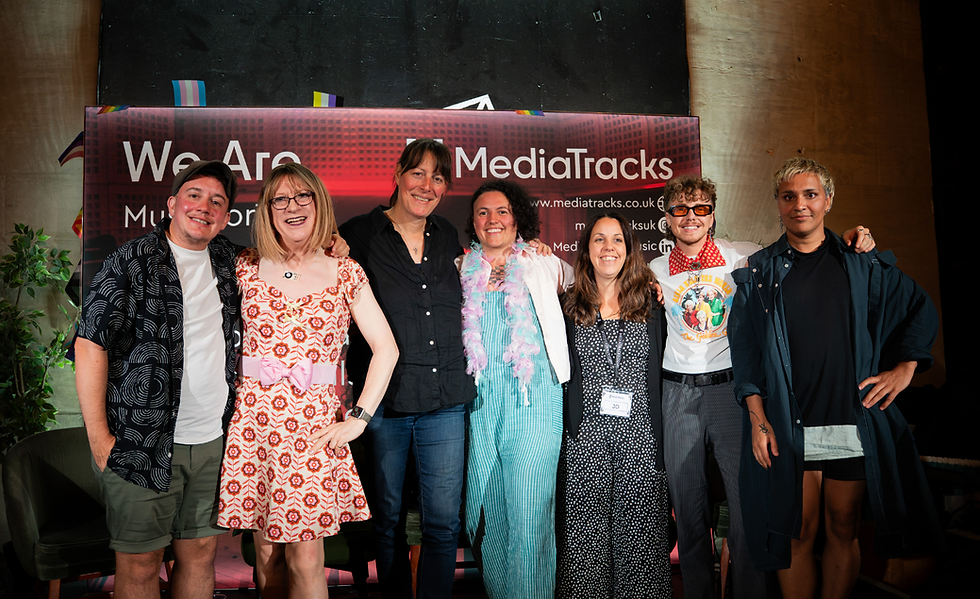
At Synchtank, we believe that true industry progress only happens when we show up, listen, and actively participate in the conversations shaping the future of entertainment. That’s why we were incredibly proud to return for our second consecutive year as an official sponsor of MediaTracks’ Pride In Sync 2026.
Hosted on July 2nd in London, this year’s event turned its lens toward a vital, nuanced conversation: "Lights, Camera, Action on Trans Visibility: Supporting Trans+ careers in the music and screen industries."
Modded by industry changemaker Joshua 'Satch' Satchell, the panel brought together a powerhouse of creative trailblazers:
ILĀ: Singer, producer, and founder of Trans Voices.
Dylan Holloway: Indie trans musician, producer, and BBC award-winning singer-songwriter.
Rebecca Root: Renowned actor known for Boy Meets Girl, Sex Education, and Heartstopper.
Col Goudie: Award-winning film editor and Head of Equality, Diversity, and Inclusion (EDI) at the BFE.
The evening wasn't just about passive "visibility." It was rallying to shift from performative allyship to what the panel beautifully framed as celebrationship: pairing real celebration with a commitment to systemic change.
Here are the key takeaways we got to listen to during their conversation:
1. Visibility is Nothing Without Safety
When asked what visibility truly means to them, the panel immediately challenged the industry to think deeper. While seeing trans individuals on screen or behind the boards is progress, it comes with a real-world cost if the environment around them isn't secure.
ILĀ reminded the audience that an intensive period of visibility can feel like a "moment" or a "monologue" rather than systemic safety. "Visibility is nothing without safety," they noted, explaining that being out in the open suddenly brings unique risks and dangers that make it harder to just focus on doing the work.
Dylan Holloway highlighted the double-edged sword of modern media, echoing that while increased visibility means more possibility, it can also attract more danger.
2. Visibility is Possibility: Changing the Narrative for the Younger Self
Despite the risks, the panel agreed that seeing yourself reflected in culture changes lives. Dylan shared a personal memory of growing up thinking he was the only person in the world like himself, feeling deeply isolated, until they discovered a David Bowie record. Seeing Bowie boldly bend gender norms broke down walls of what was possible.
For Col Goudie, being visible today is an active gift to the generation coming up behind them. "Personally, I am being visible for my younger self," they shared, hoping their presence will help people looking for mirrors today the way they were looking for them decades ago. Col recalled how deeply it intrigued and opened their world the first time they ever saw a trans man profiled in a magazine, or later watched the groundbreaking television series The L Word.
3. The Paradox of Invisibility and Playing Beyond the Identity
Rebecca Root offered a brilliant, counterintuitive perspective on the topic, noting that early in her career, her personal mission statement was actually invisibility. Following her breakout role in the BBC’s Boy Meets Girl, which drastically shifted the landscape for mainstream trans representation on TV, Rebecca realized that true progress means trans actors getting to just be actors.
"Why should we be remarkable just for being out?" Rebecca asked. She shared that she has played just as many cisgender parts or roles where gender simply isn't the focal point of the story as she has trans-specific roles. Identity is vital, but letting trans creatives tell stories where their identity isn't the entire plotline is where true normalization lies.
4. Heard vs. Seen: Avoiding the "Petting Zoo" Scenario
One of the most profound moments of the evening focused on the difference between being seen and truly being heard.
ILĀ pointed out how incredibly isolating it can be to feel like the spotlight is entirely on you, yet you aren't actually being perceived or listened to. The panel cautioned the industry against treating trans creatives like a novelty, a "freak show," or a "petting zoo scenario". Bringing them into rooms just to look progressive without giving them real decision-making power or listening to their expertise.
How the Industry Can Share the Emotional Labor
The panel concluded with actionable, direct advice for studios, production companies, music supervisors, and executives looking to move beyond the checkboxes:
Take on the Emotional Labor: Dylan issued a direct call to action for businesses: cisgender allies need to step up, educate themselves, and stop relying on trans folks to do all the heavy lifting of teaching the industry how to be inclusive.
Fix the Basics (Like Bathroom Safety): Reminiscent of the conversation last year, Rebecca brought the conversation down to a fundamental workplace safety issue: gender-neutral facilities. If a business, studio, or recording space doesn't have a single-stall, gender-neutral toilet, trans artists are immediately placed in uncomfortable or potentially unsafe situations just trying to navigate a basic human need. "Think gender-neutral," she urged. Every single home in Britain has a gender-neutral bathroom, our workplaces and studios should be no different.
Cast and Hire Trans Creatives for General Stories: Don't just look for trans, queer, or gender-nonconforming artists when you are telling a "trans story" or a queer love story. Hire them because they are incredible film editors, brilliant songwriters, and masterful actors across all projects.
As sponsors, we left the event incredibly inspired by the raw honesty of the panel, which was perfectly capped off by spectacular live music performances from Belle Antoinette, Lexa, and Geo Jordan.
Events like Pride In Sync are critical reminder blocks for companies like Synchtank. Visibility is the starting point, but structural changes: safe workspaces, shared education, and equal career opportunities, are what keep the cameras rolling.
Thank you to MediaTracks, the British Film Editors, and the Guild of Music Supervisors for a phenomenal evening. See you next year!
Photos: Blair Wason


Comments